The Thinking Pod Innovations Ltd.
Ingenuity Centre
University of Nottingham Innovation Park
Triumph Road
Nottingham
NG7 2TU

Optimised Components, Test and Simulation Toolkits for Powertrains – OCTOPUS
OVERVIEW
The Bentley OCTOPUS project aimed to improve the sustainability and performance of electric vehicles by creating a powertrain (or e-axle) free of motor rare-earth magnets and copper, with integrated power electronics that deliver greater power density and efficiency. TTPi created a hybrid resonant switching device, blending silicon carbide with advanced silicon power devices, that matched the efficiency of existing silicon carbide technologies, while dramatically reducing cost and the minimising the damaging effects that high performance power converters can have on electric motors. This enabled a more compact and efficient design that advanced both performance and manufacturability. Collectively, these results laid the groundwork for future scalable and affordable EV technologies. The project has marked a step change in how powertrain technologies can be designed, tested and manufactured for the automotive industry.
CLIENTS/PARTNERS
- The Thinking Pod Innovations
- Advanced Electric Machines
- Diamond Light Source
- Talga Resources
- University of Nottingham
- University of Bath
- Hieta Technologies
- Bentley Motors
OUR APPROACH
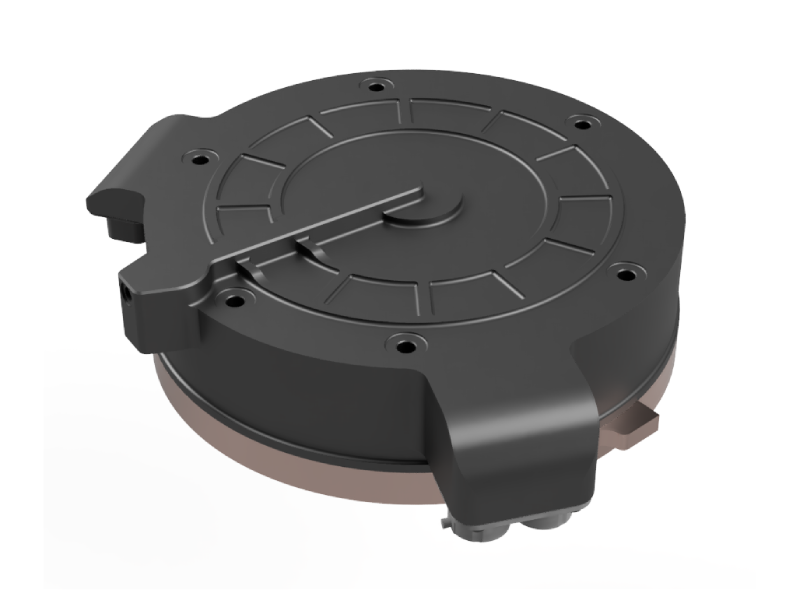
TTPi’s role within OCTOPUS was to design and deliver a cost-effective high band width power converter that drives the rare earth free switched reluctance motor. We engineered a converter architecture that was fully integrated into an axial form factor, directly connected to the motor, optimising space, cooling pathways, and electrical performance.
Central to our approach was the creation of a resonant hybrid switching device topology, blending silicon carbide with advanced silicon power devices and resonant commutation to minimise electrical losses. This innovation matched the efficiency and switching performance of full wide bandgap solutions while dramatically reducing cost – providing a clear pathway for scalable EV powertrains.
Our resonant switching topology improves output voltage, waveform quality in order to minimise bearing and winding degradation due to electrostatic discharge commonly found in these systems.
We also advanced low-level digital control techniques to unlock the full potential of the hardware, achieving precise, reliable operation at ultra-high switching speeds. Together with our expertise in device-level integration, advanced cooling techniques, and EMI management, we delivered power electronics that combined compactness with robustness.
CAPABILITIES APPLIED
DC-AC, Advanced digital control, Embedded power modules, Exploitation of ultra-high speed switching devices and conventional devices, Ultra efficient power conversion, Advanced Power Converter Modulation & Firmware Design, Integrated Motor Drives
OUTCOME & IMPACT
Through OCTOPUS we, delivered a hybrid converter solution that combined high performance with significantly reduced cost. By integrating the power electronics directly into the e-axle, TTPi enabled a more compact and efficient drivetrain design that advanced both performance and manufacturability. This project laid the groundwork for future scalable and affordable EV technologies.
APPLICATIONS BEYOND THIS PROJECT
The hybrid power converter technology and system integration expertise developed through OCTOPUS have broad applications beyond this project itself. In the automotive sector, the approach is scalable across passenger cars, commercial vehicles and high performance EVs. In aerospace, the same lightweight and efficient drive electronics can be applied to electrified propulsion systems where performance and weight are crucial. Beyond transport, the technology also extends to industrial applications, delivering high-power drives for manufacturing and automation.