The Thinking Pod Innovations Ltd.
Ingenuity Centre
University of Nottingham Innovation Park
Triumph Road
Nottingham
NG7 2TU

Our Technologies
Smaller, lighter, more efficient components
TTPi’s novel technologies enable us to create smaller, lighter, more efficient power converters and motor drive systems, which are essential in electric vehicles, renewables, dynamic industrial processes and green aerospace.
Using TTPi’s technology we can package components into lightweight, compact, modular units that will produce major savings in precious raw material use, energy, cost, and deliver a better performance compared to anything currently available.
We work with customers and collaborators to transform how they generate, manage, and use energy to create sustainable systems resulting in savings and environmental benefits, powering the push to Net Zero.
Ultra-Efficient Power Conversion
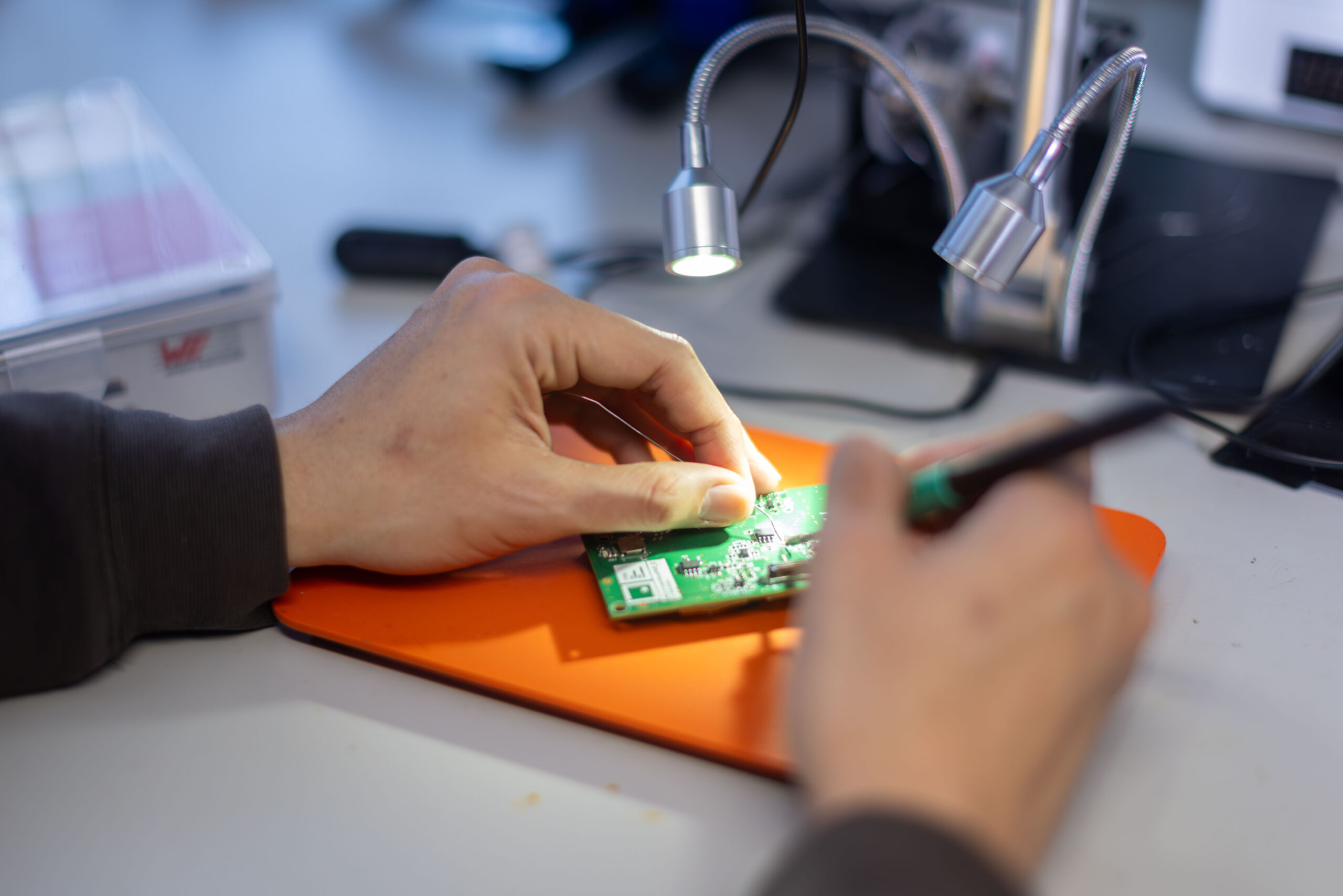
At TTPi, we specialise in advanced power conversion architectures, which utilise the latest semiconductor device technologies. By leveraging topologies like multi-level and hybrid multi-level inverters, Auxiliary Resonant Commutated Pole (ARCP) converters, matrix converters, in addition to novel isolated and non-isolated DC-DC architectures, we can deliver solutions that reduce electrical losses, weight and volume.
TTPi is particularly experienced in the exploitation of Wide Bandgap semiconductors, including GaN and SiC. Combined with suitable topology, they can dramatically reduce the size of passive components through high-speed switching and advanced control. We use machine learning and precision digital control to manage high performance power systems, enabling simplified, efficient designs with a reduced bill of materials.
Advanced Digital Control
Achieving the best performance in complex power converter topologies means having the right control systems in place to handle the speed, complexity and real time demands of intricate structures. At TTPi, we combine advanced digital control techniques powered by FPGA and advanced MCU products, with machine learning to enable sub microsecond control loop updates.
Energy systems and power converters are becoming increasingly dynamic, making classic control techniques ineffective. Hence, we develop self-optimizing, adaptable systems that adjust operating setpoints on demand, using neural networks. This means greater efficiency, faster response times, and more reliable performance. We have put this technology to work in projects for VIDAR, OCTOPUS, IFX Matrix, and the National Grid ESO.

Grid Integration
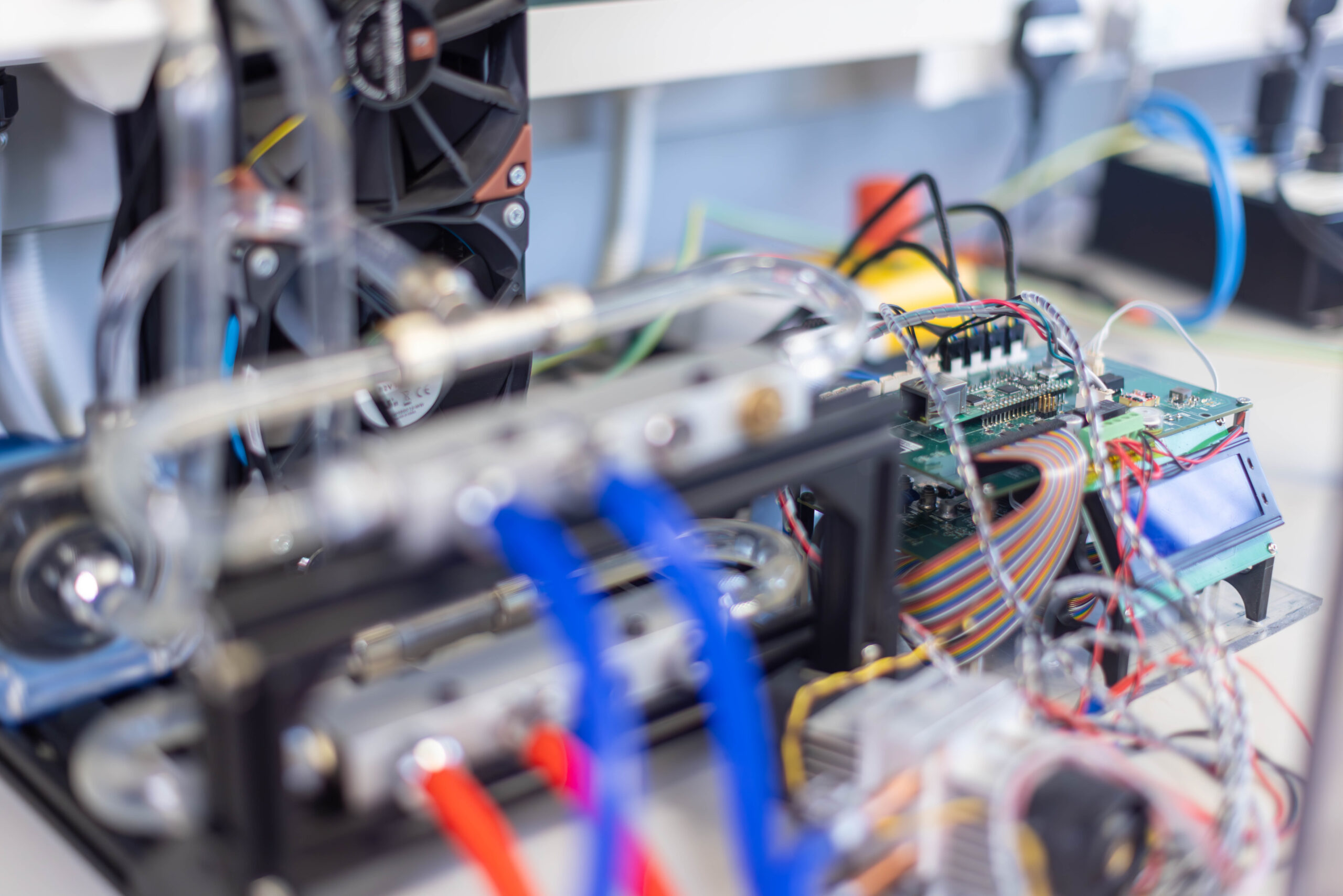
Reliable power requires seamless integration between renewables, storage, and the wider network. At TTPi, we develop advanced solutions to manage the complexity and variability of increasingly decentralised energy systems.
As renewable penetration increases, traditional grid-following approaches become less effective. We address this by combining advanced converter architectures with intelligent control strategies, including Virtual Synchronous Machine (VSM) techniques, enabling inverter-based resources to actively support grid stability. These grid-forming capabilities are critical for maintaining frequency and voltage regulation in “weak” grids with low natural inertia.
This allows renewable generators and storage systems to respond dynamically to changing grid conditions, improving resilience and power quality. By ensuring decentralised sources actively support the network rather than just feeding into it, we mitigate the risks of intermittent generation.
By delivering flexible, modular solutions capable of interfacing with multiple energy sources, we enable faster response times, enhanced stability, and more reliable operation. We have applied this expertise in projects for National Grid ESO, supporting the transition to a secure, low-carbon electricity network.
Advanced Power Converter Modulation and Firmware Design
Energy systems and power converters must operate efficiently across highly variable and unpredictable load conditions. At TTPi, we develop advanced power converter modulation strategies and embedded firmware architectures that ensure optimal performance in real time, regardless of operating demand.
By leveraging high-speed digital control platforms, we implement sophisticated modulation techniques such as adaptive PWM and space vector modulation, enabling precise control of switching behaviour across wide operating ranges.
Our firmware is engineered for real-time response, tightly coupling control algorithms with hardware execution to ensure seamless adaptation to changing grid and load conditions. This enables power converters to intelligently adjust operating states on a cycle-by-cycle basis, delivering robust performance in both steady-state and highly transient scenarios.
This combination of advanced modulation and purpose-built firmware design allows us to create highly responsive, efficient, and resilient power conversion systems for next-generation energy applications.
EMI Containment and Control
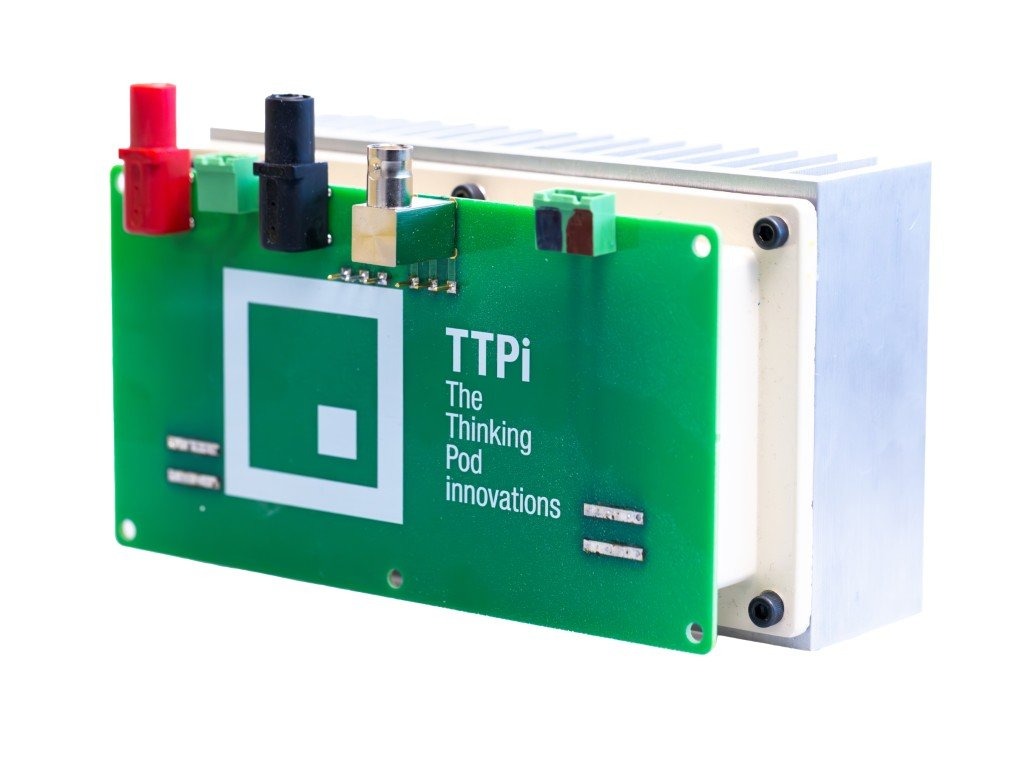
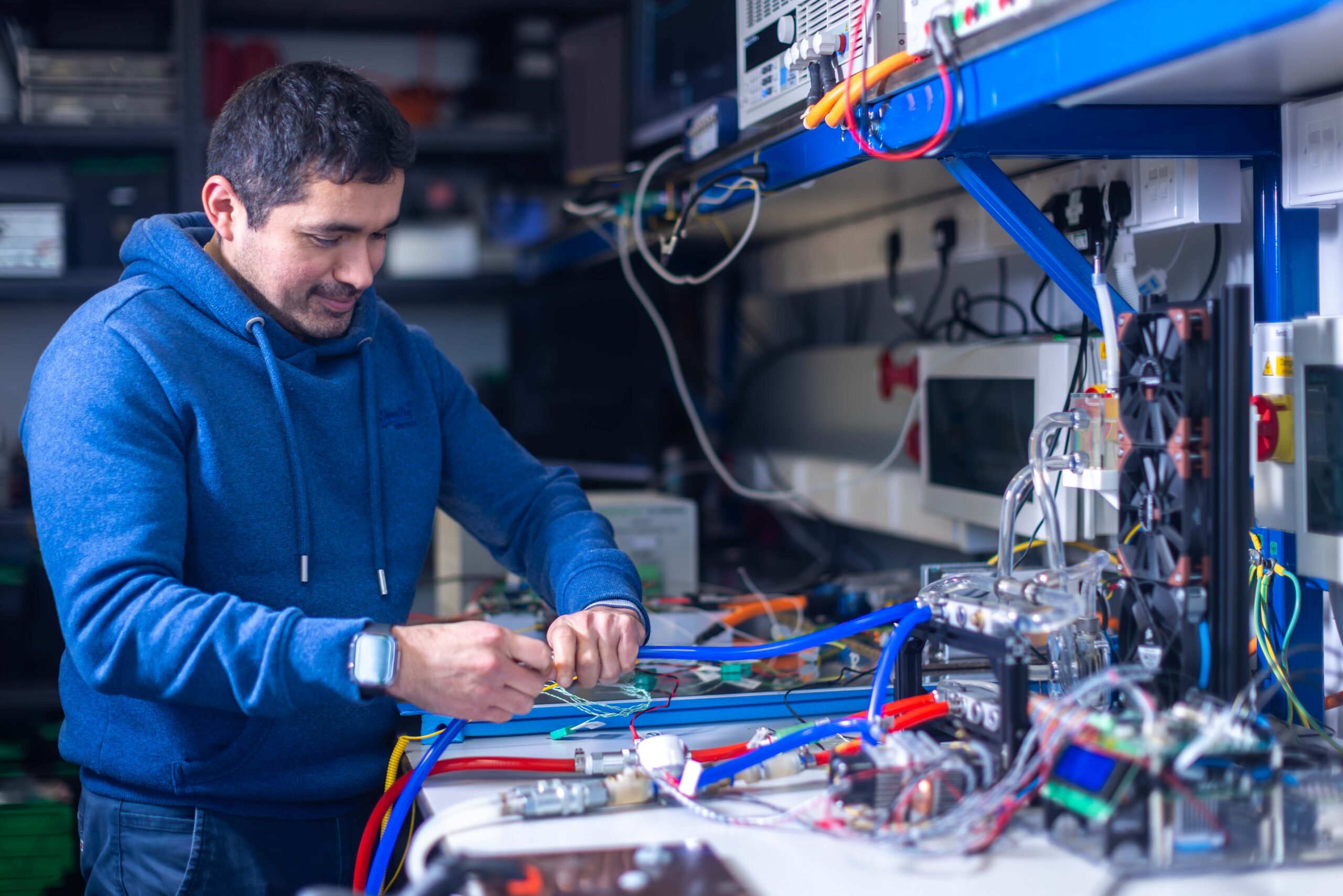
Managing EMI is a critical part of any power converter design – especially as systems become faster, smaller and more integrated. At TTPi, we tackle EMI at the source; containing, directing and dissipating the high frequency energy before it has chance to exit the system. Our proprietary IP allows us to integrate EMI filtering with the converter during early design stages. This approach not only reduces EMI effectively, but also saves space and weight. It is particularly advantageous when dealing with either embedded power module designs, or high-speed devices such as GaN or SiC.
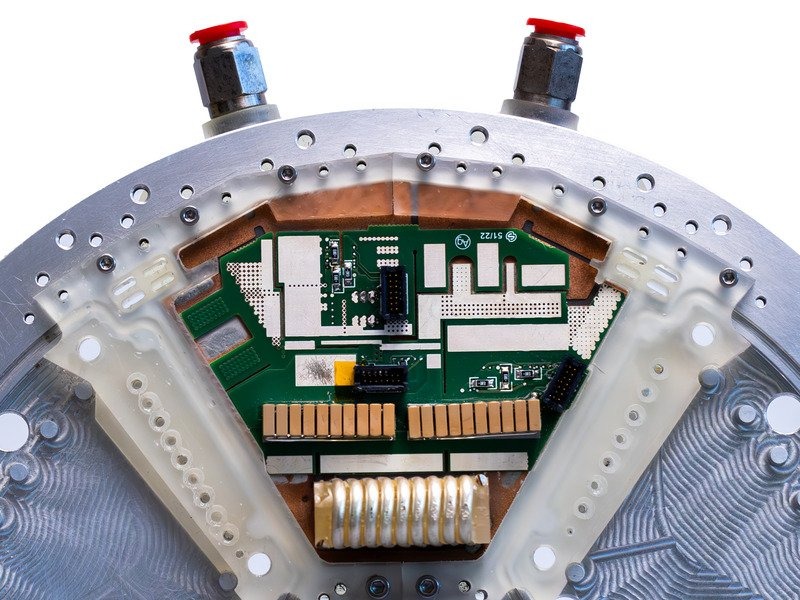
0ur first fully integrated ‘Converter-in-Package’ (pictured left) was developed as part of the ECOMAP project. It delivered a 20dB reduction in both common mode and differential mode conducted EMI emissions when using the integrated EMI filtering, in a GaN based DC-DC converter switching at 2 Mhz.
Exploitation of ultra-high-speed switching devices & conventional devices
Working with ultra-high-speed switching devices and conventional components requires careful design to get the best out of each technology. At TTPi, we apply low-inductance power circuit layout techniques and expertise in both conventional and embedded packaging to ensure switching devices operate at their full potential.
Our experience spans a wide range of power converter topologies, from familiar two-level and three-level designs (NPC, T-type, modified T-type) to advanced approaches like auxiliary resonant commutated pole (ARCP), matrix converters, current source inverters, dual-active bridge, and modified DAB configurations. This breadth of knowledge allows us to select and optimise the right architecture for each application- whether resonant or non-resonant- balancing efficiency, size, EMI, harmonic content, and weight.
From DC-DC to AC-AC and DC-AC systems, our work ensures each project achieves optimum application performance. We have proven this in projects such as the Infineon Matrix Converter, advanced DC-DC platforms, and Octopus, delivering designs that extract the maximum from every switching device in the system.

Embedded power modules
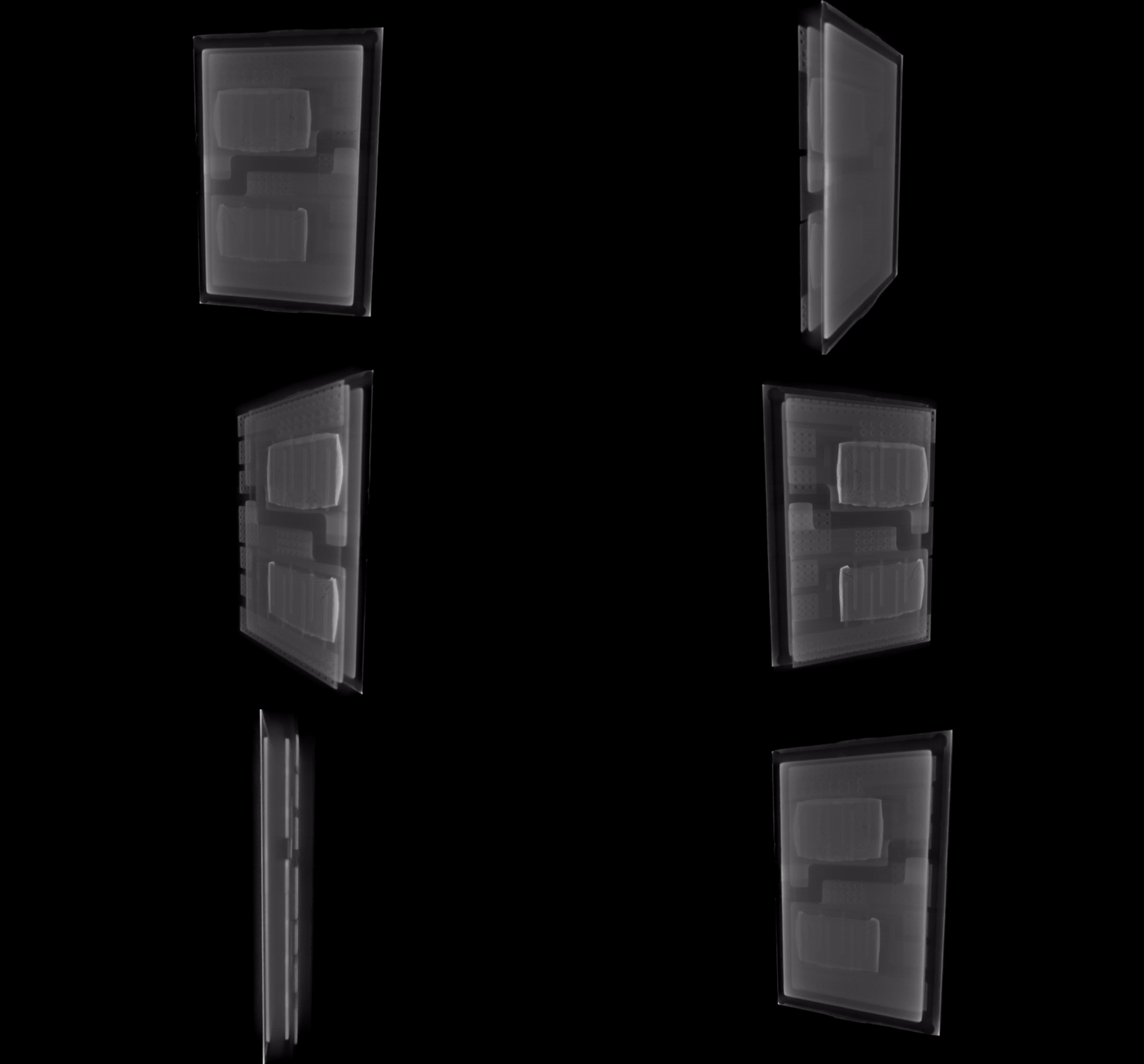
At TTPi, we are always thinking ahead – and embedded die technology is part of our roadmap. It offers a promising path towards compact, cost-effective “converter-in-package” systems. Using 2.5D and 3D manufacturing techniques, the area above the die becomes a usable, structural and functional zone that can be used for gate drivers, power planes and thermal management. This means smarter modules with high-frequency switching, optimised passive components and layouts, and built-in, air or liquid-cooled thermal management. We also plan to integrate EMI filtering and suppression. While no fully embedded high-power ‘converter-in-package’ solution exists in the market today, TTPi is at the forefront of work to turn this concept into a manufacturable, scalable reality.
AC-DC
At TTPi, we specialize in next-generation AC-DC systems that leverage synchronous rectification and are built to work seamlessly with frequency-wild sources such as turbo generators and grid-tied inputs.
Our solutions are engineered for high efficiency and high current control bandwidths, while offering precise control over dv/dt – enabling superior EMI performance and system reliability.
These technologies are already driving impact in real-world applications – from turbo generator interfaces and grid power systems to cutting-edge on-board chargers. Our work with OCTOPUS and National Grid ESO has shown how intelligent AC-DC control can deliver the robustness and flexibility required for the future of energy.

DC-AC
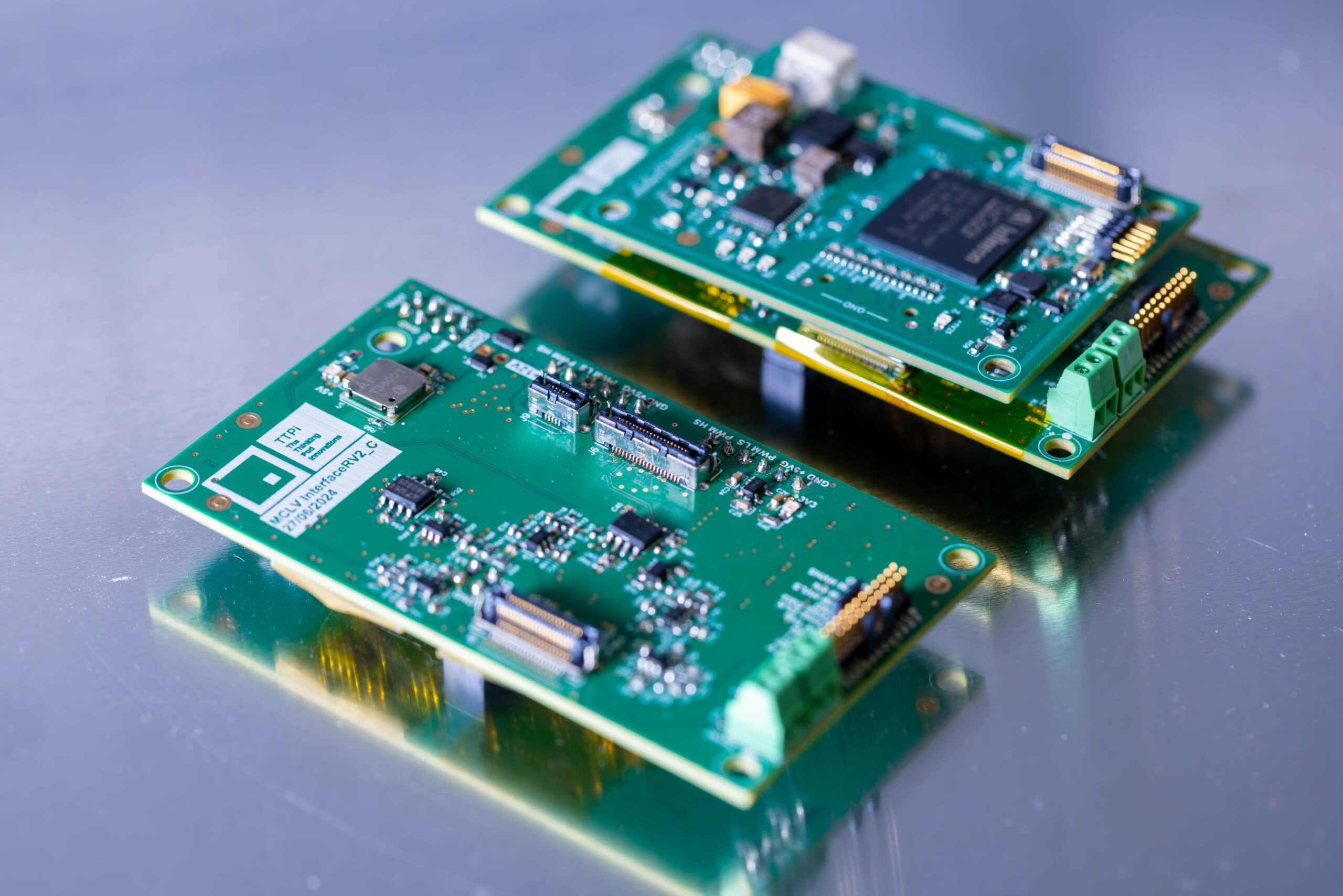
At TTPi, we work across a range of converter designs, from classic 2-level architectures to modified T-type and ARCP topologies, selecting each to match the unique demands of the application.
By combining these designs with the latest wide band gap semiconductors, we deliver systems with exceptional efficiency, fast current control bandwidths, and precisely managed dv/dt – giving engineers the performance headroom they need without compromising reliability.
Whether it’s driving an automotive powertrain, powering the next generation of vertical take-off eVTOL aircraft, or delivering smooth, responsive industrial drive control, our DC-AC systems are built for dynamic, high-performance environments. Projects like OCTOPUS and National Grid show how our technology turns demanding DC inputs into stable, efficient, and perfectly controlled AC output.
AC-AC
At TTPi, we design advanced AC-AC systems built around direct matrix converters, pairing them with the wide band gap semiconductors to push the limits of performance.
This approach delivers compact solutions with outstanding power density- ideal for applications where space is tight, but performance demands are high. From precise motor drive control in industrial powertrains to demanding aerospace systems, our AC-AC technology is designed to perform reliably in challenging environments.
We have put this technology to work in projects like the Infineon Matrix Converter, showing how the right combination of topology, semiconductors, and control can deliver AC-AC performance that’s both powerful and elegantly compact.
The advanced digital control required for things such as direct matrix converter has been shown in multiple projects such as National Grid ESO, VIDAR smart electric motor, OCTOPUS and Modular Converter.

Integrated motor drives
At TTPi, we are building the next generation of integrated motor drives – compact, efficient, and high-performing. Our technology uses minimal passive components and innovative topologies to reduce losses and the size of thermal management systems, so entire drives fit into the motor housing.
Our drives come with advanced features, like a controllable grid displacement factor that helps boost power quality and efficiency. Everything is controlled through a single FPGA, enabling fast, precise real-time operation. We also bring expertise in innovative converter technologies such as hybrid multi-level or auxiliary resonant commutated pole (ARCP) inverter designs—key enablers for fully integrated variable speed motors for automotive and industrial applications. This work has been demonstrated in the VIDAR smart motor, launched in March 2025.
We’re pushing the boundaries further with new innovations, like our upcoming motor control patent developed as part of the Bentley OCTOPUS project in which we have developed different control algorithms for individual motor types. This includes, high precision encoderless control for synchronous motors, which operate at very low speed, to AI based control of highly non-linear motors.


CONTACT US ABOUT PRODUCTS, PROTOTYPES & PARTNERSHIPS